Welcome to Virginia Beach Bird Control: Prevention and Removal of Unwanted Birds
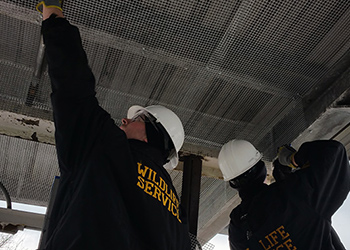
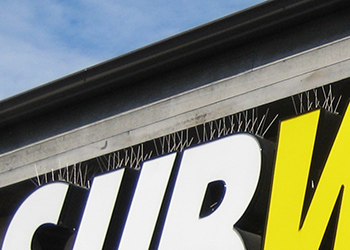
Our company specializes in resolving problems caused by birds in Virginia Beach, Virginia, both residential and commerical. We handle bird species such as pigeons, starlings, grackles, sparros, and even Canada Geese and woodpeckers. We generally don't kill birds - we prevent them from causing problems. Most commonly, this means that we install barriers that prevent them access to your building or property, or anti-roosting devices that prevent them from landing, nesting, or roosting on your home, store, building, or anywhere. We use netting, needle strips, shock track, and more. We do offer trapping in some cases, and removal of birds from warehouses, grocery stores, or other commerical or industrial buildings by netting or sometimes pellet shooting. We have a wide variety of tools and methods for solving every manner of bird problem. Call us at 804-277-4191 to discuss your bird problem today.Our Work
Full Range of Bird Control Services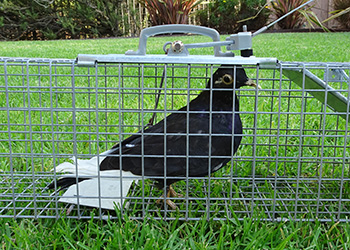
More About Us Virginia Beach Bird Control:
Sparrows, starlings, grackles, and pigeons can be dangerous once they choose our place as their new home. They can be a possible carrier of parasites like mites, fleas, and ticks, and they can be a transmitter of zoonotic diseases. Our expert specialists have state-of-the-art equipment and skills to protect your family and your investment from the threats of these species. With our comprehensive bird inspection strategy, we will determine the severity of the problem, the infestation cause, and how the birds are getting in. We will present a very detailed proposal that will help you quickly understand our recommended solution. Once we reached an agreement, we will perform a full implementation of our service. We will get rid of these pesky birds and take the necessary precautionary measures to keep them at bay. We can provide you with a total removal strategy, which will include cleanup and decontamination. If there are damaged materials or contaminated insulations, we can also conduct home remediation. We guarantee absolute satisfaction to all our customers. With our systematic system, we will ensure that all steps and problems will be covered. We have a solid reputation for providing the best support to our customers on their bird problem.About Bird Nets, Uses, and Installation
Birds are beautiful and frequent visitors to our gardens, homes, stores, and warehouses. However, once they start causing damage such as pecking at the produce and contaminating products in our store, they quickly turn into a menace that must be instantly solved.
Bird netting is the easiest and most humane technique used to keep birds away from your property. By covering your produce with a lightweight bird net, you will be able to prevent any damage by a bird while at the same time allowing rain, sunlight, and pollinators in. Bird netting is however only effective when correctly installed. It is, therefore, critical that you use the right procedure when setting it up. By using the right installation technique, the net will be able to keep the garden safe from birds.
Choose the right netting size
Commercial business and growers have to deal with the suffering brought about by pest bird infestations. Flocks of pest birds usually nest on or in your property, resulting in all sorts of damage to the facility as well as the produce stored therein. Birds are also likely to interfere with the crew and customers in large stores. Bird droppings result in slippery walkways and loading docks and may result in expensive legal liability in case of an injury.
Among the most effective techniques used to get rid of this annoyance is by using bird netting. Fortunately, these nets come in different types, each with its own advantages targeted towards different types and sizes of birds as well as preferred application venues. Before investing in any bird netting, it is important that you first figure out the one that works best for you. Here are a few guidelines to make the process easy for you.
Types of bird nettings
- Knotless Netting
Knotless bird netting is a knitted polyethylene net, which tends to be much stronger than the extruded netting discussed below. Knotless netting will cost a bit more than the commonly used knotless netting.
- Extruded netting
This is one of the commonly used bird nettings and is made from polypropylene using UV stabilizer. Extruded netting is preferred due to its flexibility and toughness. Unlike other bird nettings, the extruded netting is lightweight, requires less support, and can be used to directly cover plants. It is also an economical alternative to the entry-level usage. This bird netting is ideal for use in gardens although it does protect against the cabbage white butterfly. Extruded netting is a great choice for protecting your fish.
- Knotted Netting
The knotted bird netting is usually made using a high-density polyethylene and nylon. The knotted structure gives it extra strength and durability and is more suitable for use in commercial areas including office buildings and school courts among others.
So what type of bird netting should you go for?
This is easy and helps you determine the size of the netting needed for the size of the area you intend to deter birds from. If you are dealing with small birds such as sparrows, a small dimension net with smaller areas between strands of netting will be the most effective. You must, however, keep in mind that large spaces in between stands will not deter smaller birds from the netted area. This can be a major problem given the fact that most people dealing with a pest bird infestation want a single and complete bird control solution when setting up the netting on their property.
Equipment needed to install bird netting
Installing bird nets is a complex undertaking. Keep in mind that there are different approach methods used to determine the exact size and the length of bird netting you will need. The equipment needed for the job also varies based on several factors. First, you need to concentrate on the lift you intend to access the areas that require netting. Unfortunately, lifts are high priced and most netting installation service providers rely on hired equipment to install the bird netting.
Platform lifts are the commonly rented equipment and these usually vary in price based on the height they have to go up and if the rental company is delivering the lift to the site or not. The average cost of hiring the lifts ranges between $350 to $600 a day. This explains why bird-netting services are that expensive.
Besides the lifts, you will also need an array of other equipment such as crimping tools, caulk guns, concrete drills and several other types of hand tools needed for the job. You will also be required to arm yourself with the numerous components of bird netting. Keep in mind that you might have to install and attach the netting in corners and you should, therefore, understand corner attachments, perimeter cable, intermediate attachment, net ring looping m ferrules as well the netting itself.
Harvesting your produce through the bird netting
The ideal way to access the plants for harvesting is dependent on the technique used to secure the netting during the installation. If the netting is secured in place using garden staples, all you need to do is to remove them, reach inside to harvest your crops and simply reattach the netting in place one done.
If the netting is stapled into a raised bed, removing the netting can be quite complex. Rather than removing the netting out of your way, use a knife to make small holes close to the produce you intend to harvest. Make sure that the holes are big enough for you to remove the produce without allowing the birds in the netting.
Also read our other bird tip: What should I do with a pigeon after I catch it in my house?
We have the most experience in Virginia Beach at understanding the nuisance birds of Virginia. Our 7 years of experience in the field ensures excellent results.
We pride ourselves on the quality of our bird control work. Our work is professional grade and long lasting, usually for the life of the building.
We are fully Virginia licensed. We carry the correct safety equipment, and operate in a safe and professional manner to keep your building and people safe.
Call us at 804-277-4191 to discuss your bird problem and our process. We are always responsive by phone. We can usually schedule next-day appointments, and provide written estimates for all our bird work.
Thank you Virginia Beach Bird Control for keeping the pigeons off of my storefront. My sidewalks are clean now!
These guys were the only ones who could get a sparrow out of my clothing store. Thank you!
Your goose abatement program has kept my golf course dropping-free. I recommend Virginia Beach Bird Control.